Swolitical science

a blog about politics and fitness

  • Elvis leg

    A short follow-up to my post last week.

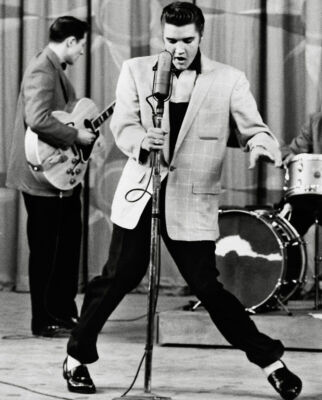
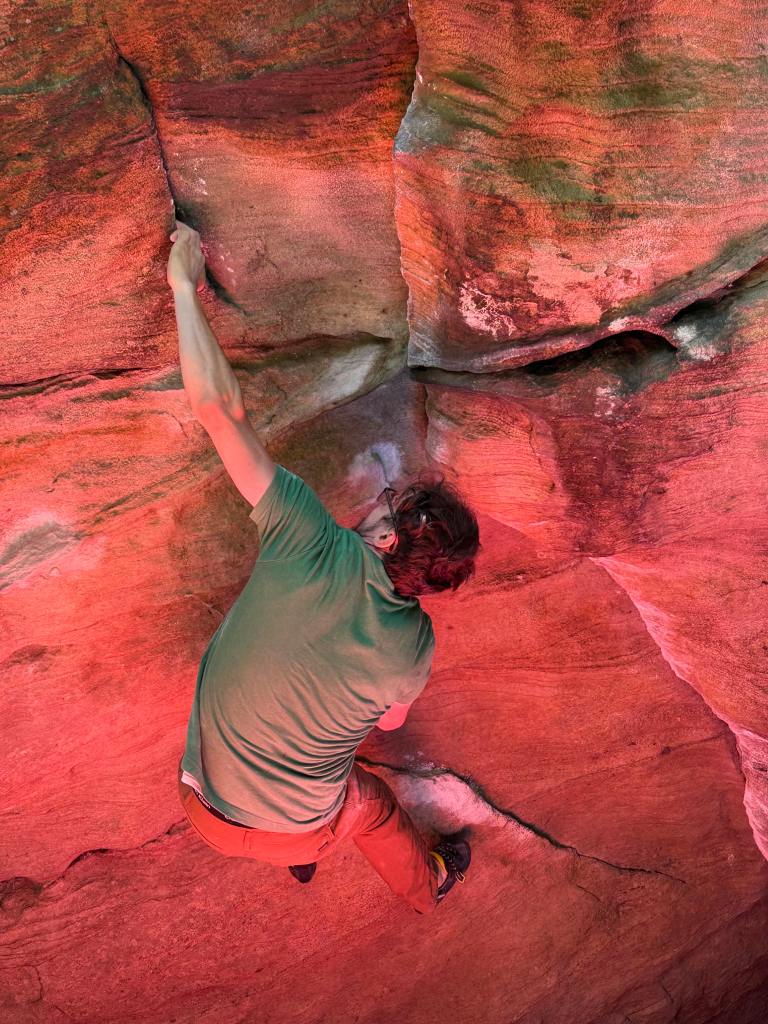
    A couple of days ago I eked out a send of my first outdoor 5.12. It wasn’t the most inspiring climb, and it’s almost certainly a bit soft for the grade, but it’s an experience I’ll remember. The route is defined by a distinct crux down low — a v4 boulder problem that involves making a big move off of awkward crimps to a jug, then a couple of powerful moves to a rest. I’m a relatively strong boulderer, at least for this level of difficulty, so I was able to quickly figure out a reliable sequence. What I didn’t count on was the other two-thirds of the climb being difficult to read. I didn’t bother working the top, figuring that I should save energy and simply on-sight the 5.10 climbing above. This, I now realize, was a mistake. (I’m still relatively new to ‘redpoint’ tactics on harder routes.) It’s not a climb often done, so the upper part of the route turned out to be lichen-covered, ambiguous, and relatively chossy. Thinking the top would be a victory lap after the crux, I charged up after the rest and ended up off-route, well above the previous bolt, and unable to clip the next piece of protection. Perhaps because of adrenaline, perhaps because of nerves, one of my legs started to involuntarily shake when I was about to make a committing move in this precarious position. (Climbers call this ‘Elvis leg.’) While my mind felt relatively clear and focused, my body began to physically react to the situation. I took the cue, calmed myself, and down-climbed back to the rest to find another path. I ended up finding another way up, though still not particularly smoothly. In the end, perhaps not the wisest choice, I ended up skipping a bolt and going straight for the chains.

    I’m jotting down this anecdote for a few reasons:

    1. First, one of my general long-term athletic goals is to become a solid 5.12 climber—to be able to confidently jump on any 5.12a–5.12d and feel comfortable working the moves. This was my first 12a on lead, and it feels like crossing a little milestone.

    2. Second, in line with my post last week, the experience is a vivid demonstration to me that technique, more than strength, is a bottleneck for my progression. Of course, it always helps to be stronger, more flexible, leaner, and so on, but it’s more evidence that those are probably not where I should place emphasis.

    3. And third, it’s one of the first times as an adult where I’ve felt my body responding completely differently from my mental state. My mind felt relatively calm, even when I had made a mistake. My body, however, was clearly feeling something different entirely. The last time I felt this kind of radical disconnection, at least that I can remember, is the social anxiety that followed me as a young person. As a lifelong introvert, I’d always feel my body react when I was asked to say something in front of any group larger than a handful of people. Heart pounding. Hair raised. Throat dry. It took years for me to be able to understand, separate, and adapt to those physical responses so I could perform in front of groups. I still feel those reactions to this day, even when I’m doing something as routine as lecturing. Those experiences as a young person continue to help me now, in pursuits as diverse as rock climbing, dealing with family drama, or navigating faculty politics. It’s a simple insight, but one that continues to serve me well: Physical reactions are *information* that can be embraced, ignored, or channeled.
  • Injuries, training notes, and deliberate practice

    In the late spring I severely sprained my ankle. A little carelessness at an unfamiliar bouldering gym led to a frustratingly avoidable mistake. I hobbled around the first week on crutches, then managed to get by with a limp. Eventually I was able to climb, but only on top rope and only by hopping around on one foot. After a month or so, I was able to gently weight my foot on climbing holds and start leading again. As a consequence of the ankle, however, I had to be much, much more intentional with foot placements. I had to literally look at my foot for every placement. This had an unexpected effect. After climbing in this more slow, deliberate style for only a few weeks, despite not being at full strength, I found that I was actually climbing the same grade, if not harder, than I was before. It had never occurred to me that a lack of precision, or a lack of explicit attention to my feet, was leading to simple mistakes. When I was able to take this new pattern of slower, more deliberate footwork outside a month later, I immediately was able to succeed on much harder routes.

    About three months after the initial injury, I decided that my ankle felt strong enough to boulder again, but that it was still too risky to take larger ground falls. My response was to focus on the 12×12-foot ‘system boards’ (a Kilter board and a Tension 2) in my local gym, which can be tilted to 40–50 degrees. At those angles, this means your feet are never much more than 3–4 feet off the ground. Minimum risk, I thought, and I could get back to bouldering. I had played on the boards before, but never consistently. As with the rope climbing while still recovering, I quickly noticed that the steep boards exposed a number of weaknesses. Of course, I was weaker from not bouldering for months. But I also noticed limitations in basic flexibility, core strength, and particular body positions, not to mention basic finger strength. Simply working the boards for two days a week, no more than an hour or so, has led to straightforward improvements. After about two months only bouldering on the system boards, I’m now not only as strong as I was before being injured, but arguably stronger. And the boards are actually a lot more fun than I realized. As the fall climbing season begins, I’m now in a position to try local bouldering projects that last year were well out of reach.

    So, what do I make of all this? Earlier in the year I read Ericsson and Pool’s Peak: Secrets from the New Science of Expertise. In that book, the authors make the distinction between ‘purposeful’ practice and ‘deliberate’ practice:

    With this definition we are drawing a clear distinction between purposeful practice — in which a person tries very hard to push himself or herself to improve — and practice that is both purposeful and informed. In particular, deliberate practice is informed and guided by the best performers’ accomplishments and by an understanding of what these expert performers do to excel. Deliberate practice is purposeful practice that knows where it is going and how to get there (98).

    For a lot of people, myself included, there is a misunderstanding about practice. They hold the (often implicit) belief that simply by being consistent you’re bound to improve. For example,

    They assume that someone who has been driving for twenty years must be a better driver than someone who has been driving for five, that a doctor who has been practicing medicine for twenty years must be a better doctor than one who has been practicing for five, that a teacher who has been teaching for twenty years must be better than one who has been teaching for five (13).

    But, Ericsson and Pool write, the evidence suggests that’s wrong. They write that the body of academic research on the subject shows that, generally speaking, once a person reaches that level of “acceptable” performance and automaticity, the additional years of “practice” don’t lead to improvement. In fact, in the absence of deliberate practice, the person who has been at it longer may actually be worse off. Without intervention, cultivated habits can deteriorate.

    I didn’t realize it until recently, but my post-injury response shifted my behavior from simply being (loosely) purposive with my climbing to being more deliberate. I was accidentally and haphazardly following tried-and-true methods coaches use to train intermediate-to-advanced climbers and seeing direct gains as a consequence. I wish it didn’t take an injury to discover these basic insights, but I’m glad something positive has come from it. I’m not really interested in turning an activity that I enjoy into a chore — you’re never going to see me doing long, grueling hangboard workouts — but these last few months have impressed upon me how powerful habit mixed with even a little deliberate practice can be for athletic performance. As my ankle fully recovers, hopefully it’s a lesson I can carry forward.

  • projects and projecting

    During this month MV and I have decided to embark on a particular project: “benchuary.” Each weekday in February there is a workout posted that we will need to complete. The ultimate aim, as the name implies, is to improve our bench press. I’ll admit: this is far and away the ‘bro-iest’ (jock-iest?) venture I’ve ever undertaken.

    The idea of training towards a goal, or projecting, isn’t new to me. However, a book I recently read by the philosopher Kieran Setiya has cast the projecting process in a helpful alternative light. In Midlife: A Philosophical Guide, Setiya distinguishes ‘telic’ from ‘atelic’ activity. Telic activities are aimed at terminal states, at which they are finished and thus exhausted. Others are atelic, they are activities that do not aim at a point of termination or exhaustion, a final state in which they have been achieved. An example of the former is walking to the store. And an example of the latter is simply going for a walk. Unlike walking to the store, going for a walk doesn’t aim at its own completion. The pleasure is in walking, itself.

    He continues,

    If your sources of meaning are overwhelmingly telic then whatever their value … they are schemes for which success can only mean cessation. It is as if you are striving to eradicate meaning from your life, saved only by the fact that there is too much of it or that you keep on finding more.

    This, in his view, is the problem with being consumed by plans and being obsessed with getting things done. Setiya describes himself as trying to respond to the self-subversion that is part and parcel of the “project-driven life.”

    The problem is not the risk of running out [of projects.] It is that your engagement with value is self-destructive. The way in which you relate to the activities that matter most to you is by trying to complete them and so expel them from your life. Your days are devoted to ending, one by one, the activities that give them meaning (133).

    As a consequence, ambitious people will misattribute the source of their unhappiness:

    It is easy to blame your choices: the wrong relationship, the wrong profession. And so you leave your partner and change careers. There may be good reasons for doing those things, but this is not one of them. It is a confused response to a midlife crisis. Sensing a flaw in your projects, you blame their particular goals, not the fact that you are goal-fixated, and attempt to start over. So long as starting over means adopting new goals, it will at most distract you from the structural defect in your life. Keeping busy is a great diversion; but it treats the symptom not the cause.

    From fitness, to writing, to relationships, I hope to invest more fully in the resource-rich atelic activities in my life and not get lost in the emptiness of a ‘next project’ mindset. While it may sound like a cheap motivational slogan, it’s helpful to remind myself that what’s enjoyable about activities like benchuary is the process — the challenge, the novelty, sharing the experience with a good friend — and not simply upping my 1 rep max.

  • What is Old is New Again

    Recently, the New York Times published an editorial by Thomas Edsall titled “A National and Global Maelstrom is Pulling Us Under”. In the column, Edsall corresponded with a number of prominent scholars about America’s current political predicament. Many of the scholars decried the ‘decline in common American identity’ brought about by economic and social change over the past few decades.

    What struck me about this editorial was not necessarily the conclusion reached by the scholars but this quote from Pippa Norris: ‘(democratic) backsliding is strengthened as the political system struggles to provide outlets for alternative contenders reflecting the new issue agenda on the liberal-left and conservative right.’ With this statement, Norris is essentially laying America’s political problems on its institutions, which are not flexible enough to incorporate newly emerging social and political forces. Because of its two-party system and system of checks and balances, America is stuck with an institutional framework fails to accurately reflect and give voice to our ‘increasingly diverse plural society and culture.’

    Now, being a comparativist who studied regimes and institutions, Norris’ argument echoed one from the distant past and one that I came across quite a while ago. In 1968, Samuel Huntington formulated a similar argument, but one that applied to developing nations. In his classic of Modernization Theory found in Political Order in Changing Societies, Huntington’s argument ran something like this: political instability throughout the world was a product of economic and social change brought on by the transition from traditional to modern society. New demands and movements emerged in the process of modernization that traditional institutional forms could no longer contain or incorporate, leading to frustration and instability.

    To me, it’s interesting that scholars have reverted, perhaps inadvertently, to the modernization framework used to explain political instability in the developing world. How could a thoroughly modern society’s institutions fail to incorporate an increasingly diverse plural society and culture? Would a more parliamentary form of government have been able to moderate some of the loose forces in America? I am skeptical of the claims that American institutions are not flexible enough to incorporate newly emerging political forces. This is because our system has done a great job of incorporating a newly emerging political force. The conservative movement that spread throughout this country since the end of World War II, and that is causing much of this scholarly consternation, has been incorporated into the political system. I would argue that it has not only been incorporated, but it has also taken over parts of the system. I am not sure proportional representation would have moderated the conservative movement because it would not have given the movement the total victory it so desires to halt America’s ‘terminal decadence’.

  • The Tyranny of ‘Progress’

    When starting out with fitness, it’s easy to fall into the mindset that progress – either with strength, or hypertrophy or endurance – is linear. This leads to the expectation that each run should be faster than the last or each lifting session should add more weight. I recently listened to a podcast conversation between Dr. Andrew Galpin and Andrew Huberman, in which Dr. Galpin listed the different types of adaptions training can induce. For inducing strength, he mentioned a ‘3 to 5 rule’, that the number of sessions per week, sets, and reps should all fall within the 3 to 5 range. He also said that weight should increase 3% to 5% per week.

    Now, I had to pause and ask myself, is a 3% to 5% increase each week possible over the long term, particularly for intermediate lifters like myself who have been lifting for over 5 years? Sure, there have been periods when I have made sustained progress and probably approached this level of incremental gains, week on week. But, that progress was invariably followed by a plateau, when my body adapted to the load and progress fell off. I’m very skeptical how this level of constant progress can be maintained for someone who has reached the point where their body is conditioned to training.

    The point I’m trying to make is that the expectation of constant gains and progress might discourage some from continuing to strength train or train in general. The quest for optimal gains now can lead to a sub-optimal outcome later. It’s better to have long-term mindset with fitness. It’s good that beginners in strength training and running for endurance/speed see immediate gains. This will probably help them develop habits that will keep them in the game. But for people who are at an intermediate stage, why should they keep putting in the work if their not constantly seeing progress? They need to think in terms of years rather than days or weeks, because the work they’re putting in now might not pay off until a few years down the road.

    When I look back over the years that I have been lifting, I see that I’ve gone from benching 135 to 225, so progress has been made. These gains came when I was consistently in the gym, and not just for weeks and months, but consistent for years. And I wasn’t always lifting heavy, nor did I follow a dedicated program for strength or hypertrophy. I was just showing up and putting in the work because I enjoyed it.

    Right now, my running progress has stagnated. I’m not running faster, particularly with my easy runs, week to week. In fact, I’m slower some weeks. This lack of performance may be related to my nutrition, sleep, and stress, but it is not discouraging me from getting out there in the morning and putting in the work. I’ve changed my thinking so that I believe this work is cumulative, that I’m preparing and priming my body for progress in the future. My goal now is to build mileage to prepare my body for my first 10k training block in the Spring, so it doesn’t matter if I ran a 12 minute mile this morning. Even if I don’t see progress in the near-future and miss my 10k goal time, I’m hoping that the work done in these years will pay off in the distant future, increasing my healthspan and allowing me to live how I would like to live in my 60s and 70s.

  • treadmills and citizenship

    Source

    An observation by Keally McBride in Punishment and Political Order (2007) popped into my head earlier:

    The U.S. political and economic systems have been sustained by the ideology linking citizenship and labor. But maintaining this construction is requiring that a significant proportion of our population, particularly black men, be sacrificed. The unemployed are branded as criminals, removed from public view, and permanently crippled in their attempts to participate in the workforce. Releasing prisoners from the burden of maintaining this fiction for the rest of us should be enough provocation to dismantle the links between choice, labor, and citizenship.

    One of her points, or puzzles, is that labor is connected to punishment in the US even when that labor isn’t directly profitable. Naked exploitation isn’t enough to explain the practices of prison farms like Parchman in Mississippi that, yes, had operations that were profitable for a period, but persisted in the South far later than their economically viability.

    The socializing function of labor is even clearer in the context of children. Progressive-era reformers, who gave us the juvenile court, held similar beliefs about the virtues of labor. They saw the manual training of young boys in reformatories and industrial schools as the means to correct the noxious influences of rapidly industrializing cities like Chicago. Through work, “delinquent” and “dependent” boys could be socialized into middle-class norms of propriety and a life of productive, lower-class work. Reformers held on to these beliefs long after it was clear (for example) that small-scale farming was no longer sustainable nor was ‘farmer’ a viable career path for their wards.

    Over time, we’re simply left living with a residue or echo of these older relationships and assumptions in our contemporary practices. McBride continues,

    … we would do well to remember the origins of the treadmill. Tocqueville points out that treadmills, “machines that work without producing,” were developed in English prisons in 1822 to provide constant activity for prisoners without undue competition for other workers.’ At the time, it was inconceivable that such a machine would find its way out of the prison. How curious, almost two hundred years later, it has become a common metaphor for understanding the experience of work and leisure, the rhythms of modern life, even outside the walls of the prison. Endorsing rock crushing, boulder pushing, or any other form of labor, purely for the sake of laboring, shows how far we have traveled from Locke’s initial calculation that labor is fundamentally a matter of rationality (145).

  • crushing the body

    Barbara Ehrenreich writes of her experience in the gym during the initial boom of the modern fitness industry:

    I may not be able to do much about grievous injustice in the world, at least not by myself or in very short order, but I can decide to increase the weight on the leg press machine by twenty pounds and achieve that within a few weeks. The gym, which once looked so alien and forbidding to me, became one of the few sites where I could reliably exert control.

    To men of the Left, she continues,

    fitness culture may have looked like a “retreat.” But for women, “control over one’s body” could be understood as a serious political goal. While you didn’t have to be a feminist to take up physical fitness, most women pouring into gyms had been through the punishing culture of female dieting and thinness, with its purging and fasts. They knew that women were supposed to focus on shrinking their bodies and becoming, as near as possible, invisible.

    But,

    … if women are in a way “masculinized” by the fitness culture, one might equally well say that men are “feminized” by it. Before the 1970s, only women were obsessed with their bodies, although in a morbid, anorectic way. But in the brightly lit gyms, where walls are typically lined by mirrors, both sexes are invited to inspect their body images for any unwanted bulges or loose bits of flesh and plan their workouts accordingly.

    These observations, and others, on wellness culture culminate in a wider discussion of class in the final pages of her chapter “Crushing the Body” in Natural Causes:

    Fitness, or the efforts to achieve it, quickly took on another function for the middle class — as an identifying signal or “class cue.” Unfit behavior like smoking or reclining in front of the TV with a beer signified lower-class status, while a dedication to health, even if evidenced only by carrying a gym bag or yoga mat, advertised a loftier rank. … Working out is another form of conspicuous consumption: Affluent people do it and, especially if muscular exertion is already part of their job, lower-class people tend to avoid it.

    She continues,

    Many gym-goers will tell you cheerfully that it makes them feel better, at least when the workout is over. But there’s a darker, more menacing side to the preoccupation with fitness, and this is the widespread suspicion that if you can’t control your own body, you’re not fit, in any sense, to control anyone else, and in their work lives that is a large part of what typical gym-goers do. We are talking here about a relative elite of people who are more likely to give orders than to take them — managers and professionals. In this class, there are steep penalties for being overweight or in any other way apparently unhealthy.

    While the larger chapter is more meditation than structured argument, I understand her central worry to be the generalization, or spillover, of a culture of combat and control to domains where it is either inappropriate or directly harmful to the basic task of living well. Her warnings are largely well-taken, but they downplay a healthy ambivalence that I see in my own experiences. Mirrors and scales and heart-rate monitors need not be part of a panoptic regime of self-surveillance that dominates and immiserates. Nor does ‘combat’ have to be at the center of one’s gym experiences. Though, of course, they can. On a social level, gyms can also function as a third-place in a world that increasingly lacks them. And on an individual level, moving through space with confidence — whether a flight of stairs or a cliff face — is a privilege that many, myself included, would like to enjoy for as long as possible. It’s a mistake to reduce the confidence that strength training facilitates to a mere desire for control.

    To stick with the combat metaphor… I’d like to think that the various pathological features of modern fitness culture highlighted by Ehrenreich are sites of active struggle, not simply conquered territory.

  • A Decade of Mass Protest

    The mass protest decade: why did the street movements of the 2010s fail? | Protest | The Guardian

    This is an interesting article I saw in The Guardian about the global protest movements of the 2010s, a decade that saw protests move from the Middle East to the Americas and Asia. Many of these protests achieved something. Governments fell in the Tunisia and Egypt, governments reversed course in Latin America, and income inequality became a salient political issue in the United States. Yet for all the successes achieved by these movements in the moment, many have come to see their lasting outcomes as disappointing, or as the article’s author puts it “In many cases, things got much worse.”

    So where did these movements go off track? Did they even go off track in the first place or did other factors and forces within society catch up and overtake them? The discussion within the article moves from the disappointment of the movements to ideas about different organizational forms that these movements take. In many cases, the author argues, these movements were motivated by a commitment to ‘true democracy’ or a radical version of collective decision-making. This ‘horizontalism’ is contrasted with the ‘verticalism’ of other historical social movements like the Leninist Communist Party, with their declared leaders/spokespersons and hierarchical forms.

    The article prompted to me to think about leverage and how certain social and organizational forms are good for some things, but very bad for others. “The particular repertoire of contention that became very common from 2010 to 2020 – apparently spontaneous, digitally coordinated, horizontally organised, leaderless mass protests – did a very good job of blowing holes in social structures and creating political vacuums. But it was much less successful when it came to filling them.” Indeed, these leaderless mass protests probably achieved what they achieved precisely because of this particular repertoire of contention, which allowed the movements to capitalize on multiple grievances against the existing order, attract an overwhelming base of support, and mobilize thousands.

    Despite the successes of these movements and their ability to bring about change (and they did bring about change, startling and momentous change in many cases), these movements were destined to flame out. Attempts to take the movement in a single direction would alienate some supporters. Even a commitment to a radical notion of ‘true democracy’ is bound to give some who supported a movement against the existing order second thoughts. Moreover, the opportunity opened up by these movements, particularly in situations where governments fell, allows those who have organized and can move in a single direction an advantage. This happened in Egypt, both with the election of the Muslim Brotherhood government and then the reactionary military coup.

    In the US, it could be argued the anti-elitism of the Occupy Wall Street movement sapped energy from Hillary Clinton’s campaign for the presidency in 2016. However, we would have to trace how protests in 2011-12 carried over into both the Clinton/Sanders Democratic primary and the 2016 general election.

  • fear of falling

    A few years ago I became severely ill. Despite being in the best shape of my adult life, I found myself laid out. In pain. Unable to eat properly. Rapidly losing weight. Unable to sleep for more than an hour or two at a time. I couldn’t physically leave my apartment so, whenever I could manage, I picked up books on rock climbing and mountaineering.

    I read an angsty classic by Mark Twight, essays by Jon Krakauer (among my favorites is an anecdote about the corrosive boredom of being stuck in a tent on mountain with a friend in a snowstorm), and a modern history of sport climbing titled Hangdog Days, among others. Arno Ilgner’s book, in particular, has helped me think about the mindset I bring not only to routes but to other life stresses.

    For context: while reasonably safe, lead climbing requires substantially more mental control than top-roping or (non-high ball) bouldering. Anyone can act like a hero on top rope. When you’re well above your last bolt or piece of protection, however, that heroism is tested. If you botch it… you’re going for a ride. And there are number places where I climb in the mid-Atlantic, particularly on easier routes, where one simply must not take a lead fall.

    Most, intuitively, understand the difference between objective and subjective risk when it comes to falling. It’s the difference between smacking a ledge, for instance, and taking a heart-in-throat 10 meter whip into open air. The latter, while intimidating, is perfectly safe. In practice, the distinction isn’t always so clear. It can be difficult to sort one form of risk from the other. It’s a learned skill.

    Errors in judgement can be significant. Not understanding objective threats, of course, can be devastating. With climbing, misperception is a literal threat to life and limb. You can’t manage what you don’t understand. Likewise, confusing subjective risks with objective ones has a cost. A failure to appreciate that a situation can be scary, but relatively safe, inhibits personal growth and closes off opportunity.

    We all try to tune our risk tolerance. At the crag, for example, my appetite is relatively low; I prefer the puzzle-solving and gymnastic challenge of climbing, not the rush of mastering mind and body in the face of severe injury or death. We all do something similar across the various domains of our life. Some are directly analogous to the physical risks of climbing (say how we drive on the highway) and others go beyond physical injury to other harms (how we invest and spend money for instance). Moreover, we may be risk seeking in one domain and risk averse in other.

    That all sounds reasonable in principle, but managing the feeling of risk is a distinct and difficult task — even when one believes the objective risk to be acceptable. Responding to fear has to be trained. And it’s here that I’ve found Ilgner’s advice helpful. Among the useful gems he offers is the following on ‘soft eyes’:

    Instead of allowing your face to grimace, deliberately keep the face relaxed with a “soft-eyes” focus. Eyes should be comfortably open, held softly, not squinting or staring. Your attention should be on the whole field of view rather than on specific points in that field. Don’t focus on your hands, your feet, or one portion of the rock. Rather, spread out attention and look at color, depth, shadows, and the interrelationships between objects.

    The physical responses that narrow our perception can be trained. Squinting eyes. A racing heart. Once understood, it becomes possible try hard. To allocate effort efficiently. To use the full force of our reason, our experience, to respond to the next moves in front of us. I’ve found more generally that situations that provoke fear and anxiety benefit from an awareness of my physical response to that stress. A similar approach has paid dividends in other environments in my life with some success: workplace social pressures, arguments with loved ones, and so on. Soft-eyes, for me, is a simple but helpful cue.

  • resistance training

    I’m relatively new to resistance training. The stress of finishing graduate school and securing a job took its toll in my late 20s. I threw everything into work. I was overweight, over-caffeinated, drinking too much, sleeping too little, and my nerves and digestive system were constantly on the fritz. For a number reasons, thankfully, I started turning to fitness in my early 30s. I found weight rooms and weight lifters to be friendly and supportive. And, most importantly, through resistance training I finally felt in control of my health. Each week I could add weight, or add reps, and I could see the difference. “Whoa, I benched my bodyweight! Dips? Weighted pull-ups? I couldn’t even do 1 of either of those in my 20s!!” The physical gains had knock-on effects for my mental health.

    The weight room, both then and now, feels to me to be the embodiment of self-help. Of merit. Of connecting action to impact. I’m certainly not alone. For many, the gym becomes the dominant conceptual metaphor they use to assess choice and responsibility. The barbell becomes a symbol of achievement ideology. The meritocratic ideal. I find myself sliding into this idiom at times. The slippage between weight room and life, however, creates problems. (And, to be blunt, I’m not convinced the weight room metaphor is an accurate account of actual weight rooms.) There is a chapter in Forrest Stuart’s (2016) excellent ethnography Down, Out, and Under Arrest that, I think, rewards a close read.

    In chapter 3, “Training for Survival,” Stuart follows a men’s weightlifting group on Skid Row. Here’s his description:

    This group of about thirteen men cleared debris from the sidewalk to perform physical exercises together three or four days a week. Through their workout routines, they carved out a small but cohesive community amid the turbulence of Skid Row. […]

    When the men reflected on their former lives, they overwhelmingly described addiction in terms of an alienated and antagonistic relationship between their body, driven primarily by the need to satisfy physical sensations, and their mind, which became increasingly overpowered.

    For its members, the group was a site of self-help and resistance to pervasive policing.

    […] they used their time together to formulate what we might think of as a folk ethnography of policing, in which they attempted to model police “psychology” — the general tendencies and considerations motivating officer behavior. By sharing these experiences, they built a collective repository of knowledge about precisely which characteristics make some individuals more likely than others to attract police scrutiny. Throughout these exchanges, the men tended to explain police intervention as determined primarily by a potential suspect’s outward appearances and associations.

    Weight training was in significant part about becoming ‘copwise’. The men “collaborated to make seemingly unpredictable police interventions more legible and manipulable.” As Stuart memorably puts it, “getting ‘jacked’ at the weight pile thus constituted a means to better escape getting ‘jacked up’ by the police.”

    This resistance strategy, however, has costs:

    Their approach to surviving Skid Row involved actively reconstructing the defining conditions of incarceration, locking themselves away in their SRO [single room occupancy housing] “cells” save for a few hours in which they ventured outside to engage in recreation at the weight pile.

    Likewise, territorial stigma encouraged the cultivation of ‘infra-differences’ that cut against a wider potential for solidarity against arbitrary policing:

    They invested considerable energy in their performances of infra-differences, in hopes of escaping officers’ default assumptions of criminality. Specifically, they minimized the scrutiny and suspicion they might otherwise draw form officers by amplifying the symbolic and physical distance that separated them from those they viewed as “belonging” in Skid Row. While these efforts did provide some reprieve from police contact, and even reinforced the therapeutic capacity of the weight pile, they did so at the expense of validating and exacerbating the same territorial stigma pressing down on them.

    Stepping back, a few limits of the ‘resistance training as training for resistance’ view come into focus. Many of us are set up to fail. Vitally, when we do in fact fail — whether or not we’re members of a literal weight pile — a narrow focus on liberation through the control of one’s body risks personalizing that failure and exonerating the wider institutions, political decisions, and non-decisions that all but guarantee a negative outcome.

    I don’t mean to suggest it must be this way. But I see others, and myself, often subtly slide into this worldview, particularly when it comes to issues of addiction. To my mind, in short, Stuart’s chapter nicely expresses a few of the limits, possibilities, and messy politics of weight-room style solidarity.

  • My first post

    I’m going to try to get the ball rolling with a quick post about how I will use this blog. For me, it’s basically a clearinghouse for different ideas running through my cluttered mind. This is also an opportunity to start writing about politics again after a long break (nearly 10 years!).

    Some of the political topics that I will write about are authoritarianism and political institutions, an outgrowth of my doctoral studies at the University of Chicago. Unfortunately, history has not ended and the world has moved definitively toward the topics that I was studying during that period of my life. Authoritarian rule has become more seductive, and militaries are gaining prominence in political life across the global. The ideas and research that I was grappling with in grad school have only become more relevant.

    I’ll also write posts about American politics and culture, particularly about the evolution of American conservatism over the past few decades as the conservative movement moves undeniably toward a more authoritarian outlook. And since I perform a lot of survey analysis for my job, there will probably be posts about changes in American culture based on my exploration of different surveys like the General Social Survey and the American Community Survey, perhaps with maps and other visualizations if I can find the time.

    Moving from political science to fitness, while Chris is the climber, I focus more on running and lifting. I guess you can call me a ‘hybrid athlete’ with this attention to both endurance and strength. If I do begin writing fitness posts, they will most likely be about my efforts to run a sub 20-minute 5k or how I approach strength as someone who is on the other side of 40. I will also complain about how Chris destroys me in our periodic climbing adventures.

    Other topics that my posts will touch on are soccer/football (because I’ve been really getting into tactics and how the game is like a chess match), music (because it’s long been a passion of mine), and books and TV. If you’re looking for a TV show to watch, my recommendation at the moment is This Fool available on Hulu.

  • authoritarian flow?

    Over the last year I’ve populated my nightstand with various books on mental health. A few days ago I picked up a classic: Flow: The psychology of optimal experience by Mihaly Csikszentmihalyi. Briefly, Csikszentmihalyi’s aim is to understand “optimal experience” — what the sailor feels when the wind whips through her hair, what the painter feels when the colors on the canvas begin to come to life, what the rock climber feels when they unlock a cryptic sequence of moves to ascend the sheer face of a cliff. Optimal experiences, the author argues, “usually occur when a person’s body or mind is stretched to its limits in a voluntary effort to accomplish something difficult and worthwhile. Optimal experience is thus something that we make happen” (3).

    I still have a number of pages left in the book, but the following passage caught my eye:

    Cultures are defensive constructions against chaos, designed to reduce the impact of randomness on experience. They are adaptive responses, just as feather are for birds and fur is for mammals. Cultures prescribe norms, evolve goals, build beliefs that help us tackle the challenges of existence. In so doing they must rule out many alternative goals and beliefs, and thereby limit possibilities; but this channeling of attention to a limited set of goals and means is what allow effortless action within self-created boundaries. […]

    A culture that enhances flow is not necessarily “good” in any moral sense. The rules of Sparta seem needlessly cruel from the vantage point of the twentieth century, even though they were by all accounts successful in motivating those who abided by them. The joy of battle and the butchery that exhilarated the Tartar hordes or the Turkish Janissaries were legendary. It is certainly true that for great segments of the European population, confused by the dislocating economic and culture shocks of the 1920s, the Nazi-fascist regime and ideology provided an attractive game plan. It set simple goals, clarified feedback, and allowed a renewed involvement with life that many found to be a relief from prior anxieties (81-82).

    At the crag I’ve often joked that climbing is a kind of cult. Gumbies are lured in and, eventually, become radicalized. Devotees adjust their diet, their exercise regimen, their information environment, and their free time in pursuit of an optimal climbing experience. In training one’s body, the mind begins to follow. Priorities. Assessments of risk and reward. The meaning of pleasure. Of pain.

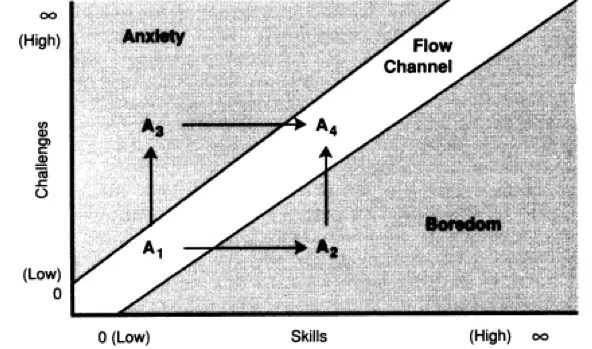
    To my mind, Csikszentmihalyi’s account shows at least one dimension of why, precisely, some ideologies are so seductive. By aligning tasks with difficulty (the author’s famous chart is reproduced above), they draw us in deeper. They provide a path to ‘optimal experience’, to flow. An effective ideology pulls on our subconscious, often without our awareness, and in so doing structures possibilities, shapes decision-making, and influences our response to reasons. While attributing this to climbing culture might be hyperbole, I don’t think it’s wildly off the mark for a number of other contexts in our midst. The anti-feminist radicalization of young men online through red-pill, MGTOW, and incel communities, is one example, or the exercise and dietary prescriptions of various theocratic regimes is another. One simple upshot is that flow is an under-appreciated, but potentially powerful mechanism of ideological maintenance.

  • newbie gains

    MV and I intend to use this blog as a place to write & reflect. Our training plan is simple: post, post, post. Let the gains begin!

Proudly Powered by WordPress